


Original price was: $351.00.$97.99Current price is: $97.99.
- Quality and Affordability Combined
- Safeguard Your Shopping Experience
- Fast, friendly, always here to help.
- Quality products for every lifestyle.

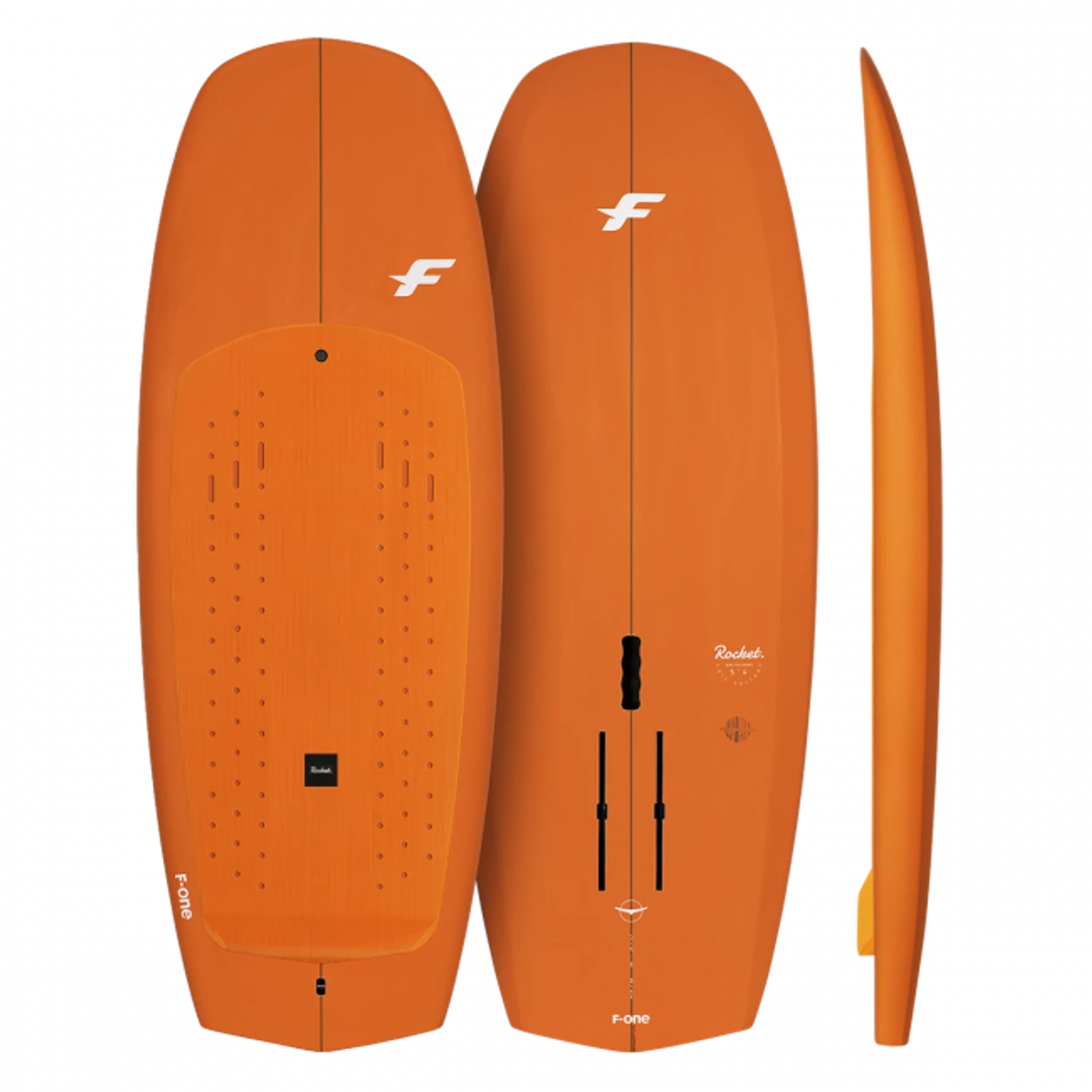
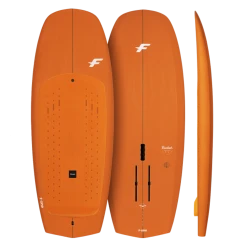
F-One Rocket Wing Wide V2 Board
Accessory Checklist |
Included |
Not Included |
||||||||||||
| Track Hardware | x | |||||||||||||
| Foot Straps | x | |||||||||||||
| Board Bag | x | |||||||||||||
The Rocker V2 is a wider version of the much loved 2020 Rocket wing board. While we love the V1 to pieces, it is a bit narrow for some riders to knee start with. Usually this means they ride a longer board than necessary to compensate or struggle with choppy water starts. The V2 adds some extra girth which gives you more stability for those challenging knee starts or allow you to go with a shorter board with the same level of stability.
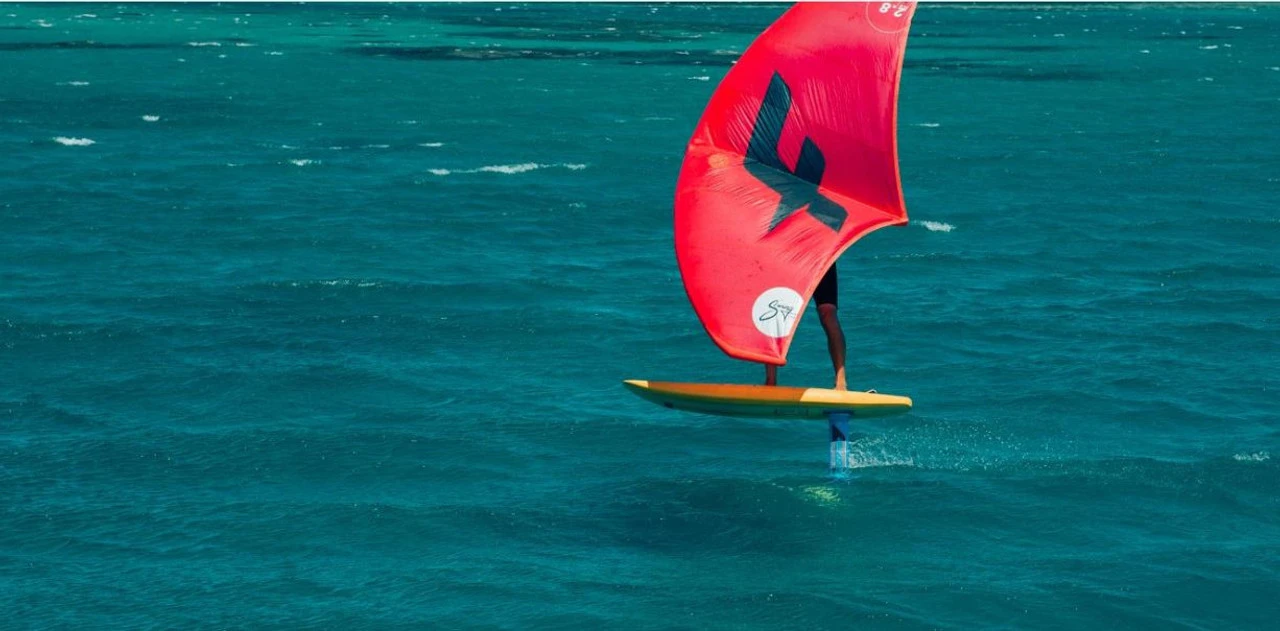
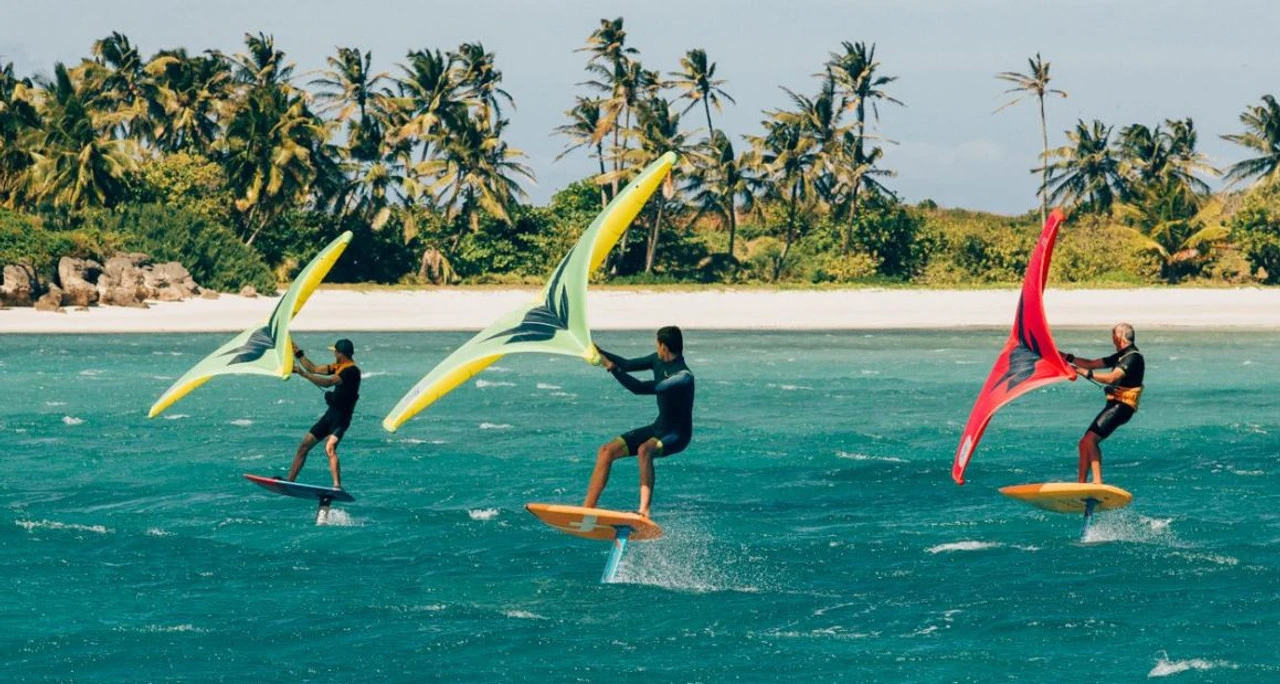
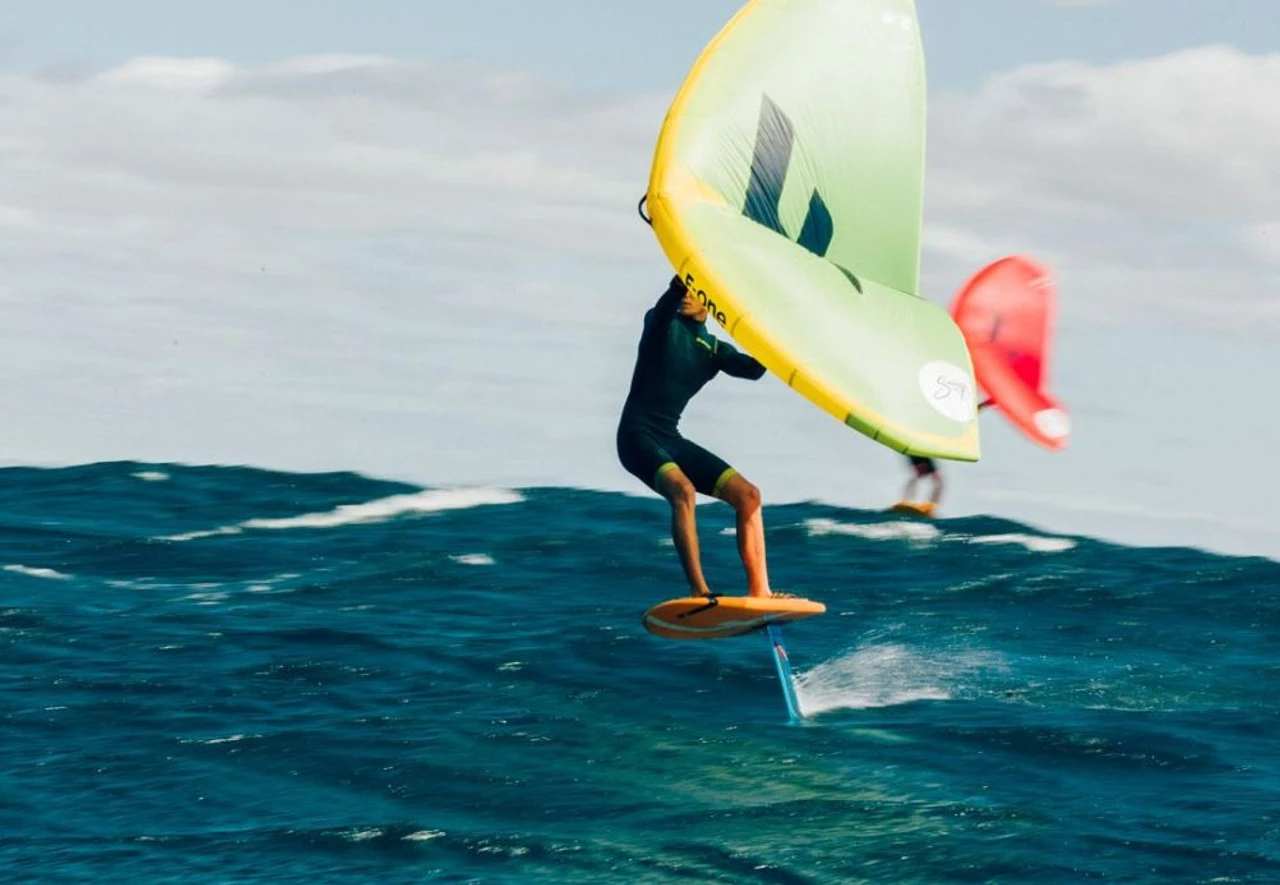
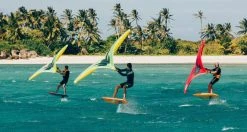
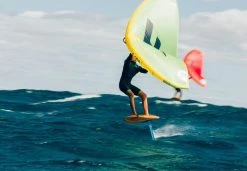
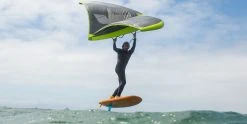
Wing surfing is one of the most exhilarating ways of flying above the water. The freedom allowed by the handheld wing is amazing. Once you’ve learned how to use it, there are many reasons to opt for a dedicated Wing foilboard to best enjoy your Wing surf foiling.
Our experience on wing foiling shows that after using our SUP Foil we could quickly switch to smaller boards. The surf foil boards on the other hand have proved to be quite extreme. Therefore we felt the need for a new type of shapes for wing surfing.
We have created a new range of wing boards with a wide range of volumes to make it possible for most riders to stand-up easily as well making sure that riding back to the shore is possible, even when the wind drops. Their dimensions and shapes are unique and specific to the practice.
Using the foil actively to create your motion is one of the biggest thrills of wing surf foiling. To ensure you can make the best use of your foil, we have created boards that will help you carve better on the swell, connect the bumps and enjoy your session.
Compared to a larger board, the ROCKET WING has:
- Reduced bulk size and reduced weight
- Better balance, natural stance
- Improved maneuverability and responsiveness
- Pumping becomes more efficient and direct
- Easier transportation and travel
All these advantages directly translate a lot more possibilities on the water.
Using some straight rocker lines for an easy take-off and a wide tail outline for an optimized volume distribution, the ROCKET WING boards feature a sharp beveled rail profile to make the release easier during take-off and the touch-down smoother when the board hits the water again. In other words, you will be up and flying in no time and you won’t be unsettled when occasionally hitting the water.
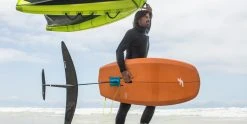
The ROCKET WING boards are equipped with a recessed handle for easy carrying, a full pad for comfort and with the twin track system on the bottom to connect with most foils on the market (4-bolt plate system). They are built with F-ONE’s proven bamboo construction with a double layer on deck for added resistance.
If flying a Surf Wing is your new foiling style, the ROCKET WING boards are the perfect matching ride.
New 4’8″ size includes footsteps and has dims 4’8″ x 21″ 44L. Just 3.5kg (7.7 lbs)

-
 FULL BAMBOO CONSTRUCTION
Bamboo fibers are highly resistant and really light. The FULL BAMBOO construction uses natural properties of bamboo veneers placed between fiberglass layers to create a strong, durable, light shell for the entire board (deck and bottom).
-
 DOUBLE BAMBOO DECK
An extra layer of bamboo (DOUBLE BAMBOO DECK) is located in the stance area to make the deck even more resistant to local heel pressures and dings. This results into light, strong and responsive boards to enjoy session after session.
-
 TWIN-TRACKS
The twin track system with lateral spacing of 90mm is becoming an industry standard.
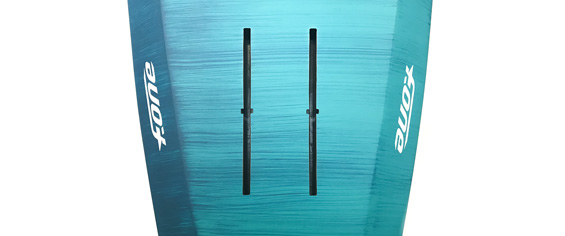
This system is compatible with all foils featuring a top plate with 4 fastening bolts. The length of the tracks enables some room to adjust the position of the foil on the board to reach everyone’s prefered balance.
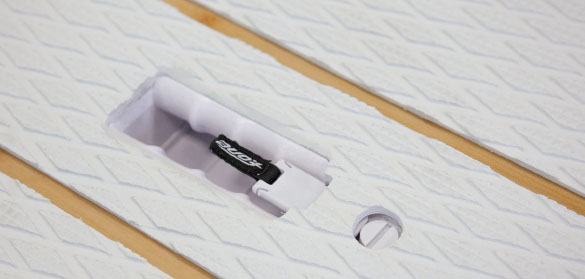
SMART HANDLEFeatured on the whole F-ONE SUP range:
the innovative and multifunction handle developed by F-ONE.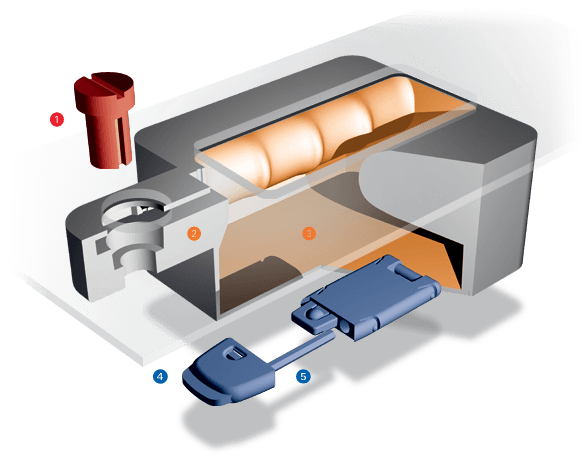
The SMART HANDLE includes the following features :
1 – Decompression valve
2 – Multifunction tool compartment
3 – Recessed volume
4 – Screwdriver head
– Allen keyMore comfortable with advanced ergonomics, it is completely recessed and makes it easier to carry the SUP. The new handle helps a lot to grab the boards easily when lying flat on the ground or on the water.
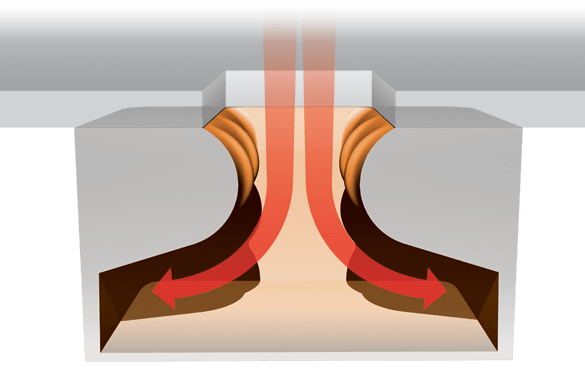
A groove has been added onto the thread of the valve so that you only have to unscrew by a few turns to let the air out. No need to unscrew it completely and therefore no risk to lose it.
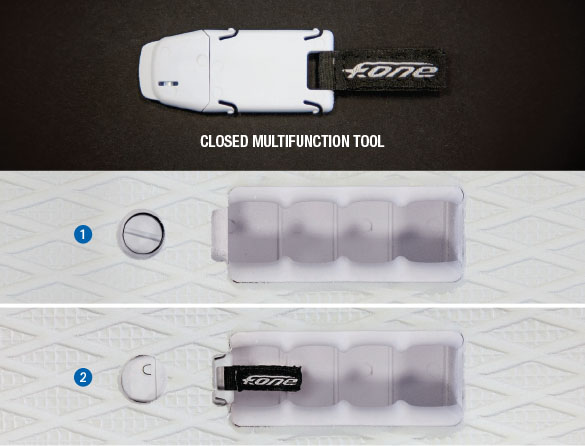
The handle already includes the screw for the decompression valve (1).
A specific multifunction tool has been created and fits neatly into the handle (2).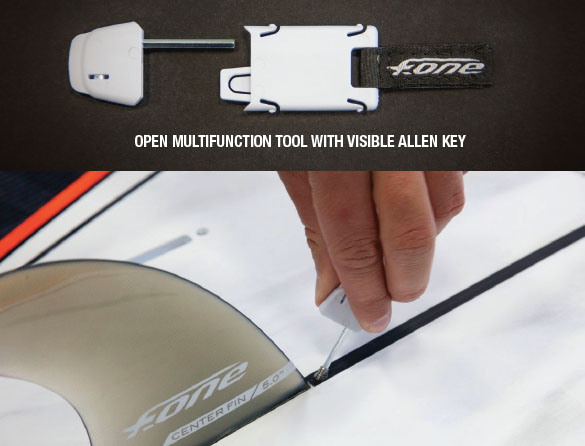
The top part of the tool was designed to serve as a screwdriver to open or close the decompression valve.
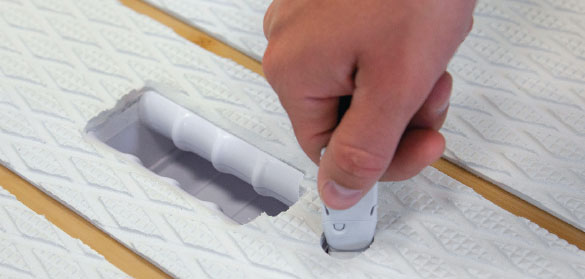
To prevent from oversight and to make sure the decompression valve is always closed when the SUP is in the water, a reminder has been included: you cannot fit the tool back into its place nor can you carry the board if you haven’t closed the decompression valve. Furthermore, the tool finds itself clipped on in this position. This was made to ensure the board can be transported without losing the tool. You therefore don’t have to look for the last place where you left the tool and can be sure that anyone grabbing your board will notice that the valve is not shut.
One rider’s experience…
F-One Kite Ambassador and local Wadell (well known kite surfing spot near Santa Cruz) resident Brian Friedmann is fleeing the upcoming cold and often windless Pacific North West Coast and will be spending the winter in La Ventana, Baja Mexico. La Ventana is a fantastic destination in the winter, with strong daily thermal wind, great vibes, good food, and plenty of outdoor things to do. Brian recently started winging and he is telling us his progression from bigger board to smaller ones, including the rocket air surf, the F-One inflatable foilboard series. Not everybody are or will be able to ride very small boards (<50L) when winging, but that being said the smaller you can deal with, the more freedom you have, whether wing surfing or not. The Wing revolution is marching on and we are all having so much fun with it – Nico Ostermann, BAKS Distribution
Team Rider: Brian Friedmann
Location: La Ventana, Baja, Mexico
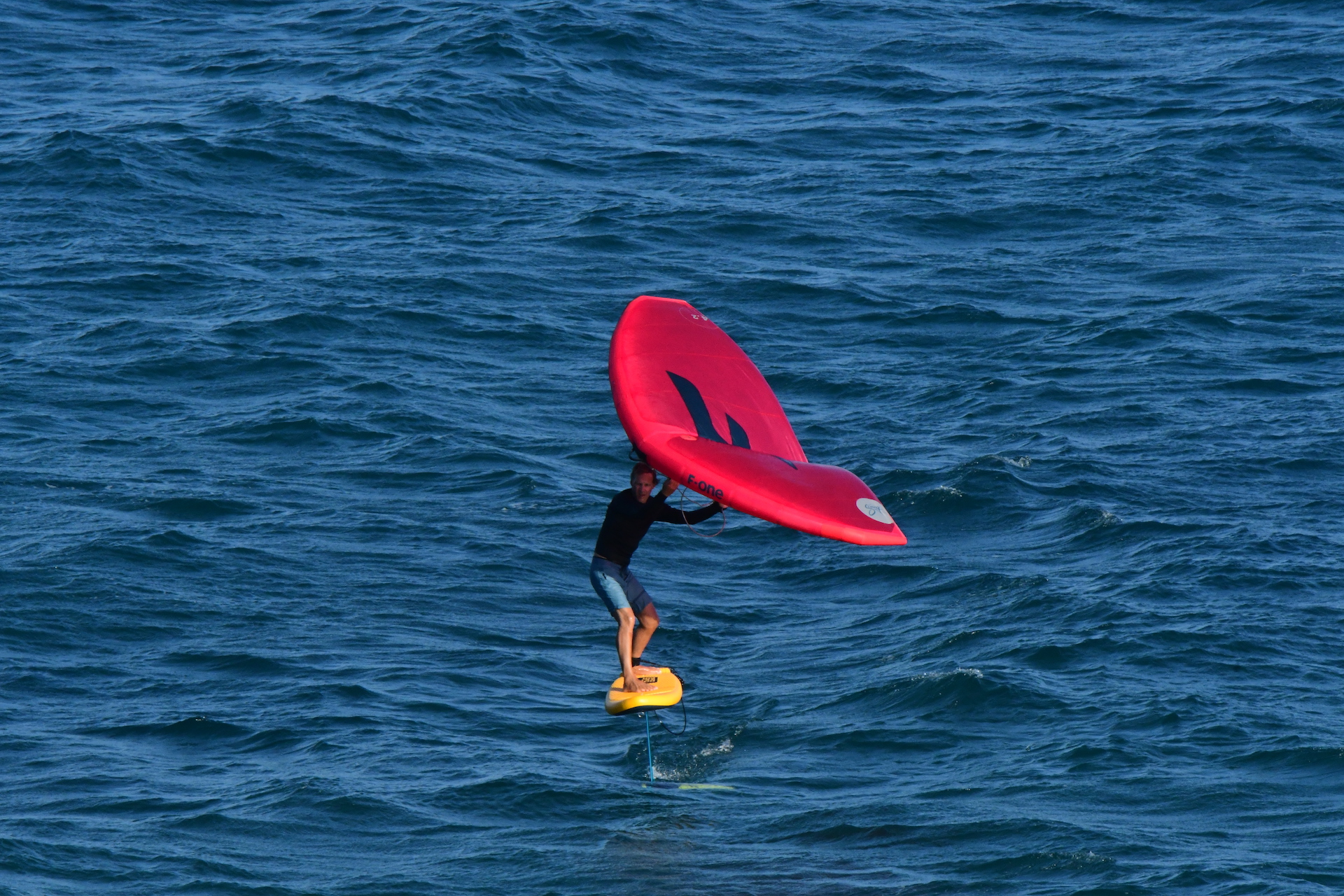
Brian with the Rocket Air Surf / Swing 4.2 and Gravity 1800
Having recently taken to wingsurfing, I’ve been going through a similar learning curve as many who have posted their experiences on social media sites. You start with some variation of a beginner setup like a big board (F-One Rocket SUP 7’6” SUP 120L), big wing foil (F-One Gravity 1800 or 2200) and medium wing (F-One Swing 4.2) with a good amount of wind. So first time out, yes, the SUP was relatively easy to get up foiling on but I found it hard to manage overall.
Hauling it up the beach, getting through the surf and the sheer size of the board 7’6” made for a lot of forward weight that had to be counter balanced by the foil underneath the water making it almost a bit counterintuitive and constantly requiring small weight shifts to keep foiling. I’m around 165lbs, live in Santa Cruz, am a decent surfer, an average kite foiler and ok prone (surf) foiler so some of those background skills helped to get foiling quickly on the SUP. Although I was struggling with switching stance which kept me from making any huge gains back upwind. After making a few runs on the larger SUP board I wanted to try something closer to the other end of the spectrum, a 42L custom “sinker” that I used for surf foiling. After all, I’ve surfed forever, have reasonable prone surf skills and know how to kite foil fairly competently so how hard could it be? The answer, very frustrating. But like many of us I don’t give up easily so I made a commitment to keep going on the shorter board no matter what. I’d already swore to myself that I wouldn’t carry that behemoth SUP back upwind so I’m sticking to the smaller board until I get it nailed. A few days at my local beach and several long attempts made, I found myself struggling all the way down the beach (frequently cursing) until one moment just before giving up for the day a big puff pulled me up and I was going. Nirvana! A board that was short enough to turn, easier to make tacks on and had a couple good glides down some swells with the iconic finger dangle of the Swing in front of me. It felt so much better than being on that boat SUP. So the next few sessions were spent trying to reproduce that one amazing water start in order to get more of that adrenaline feeling of being free on the foil with just the Swing. My shins and legs bruised and physically tired each day from all the failed attempts I continued to keep at it and not give up. This sport is really addictive and it’s interesting the pains you’ll go through to get more foil time.
I tried another shorter board, the F-One Rocket Surf 5’0” at 35L that was a bit easier than the 42L custom I’d been using. It raised my water start success rate very slightly, maybe 20% of the time I’d get up and foiling. The biggest challenge was getting the board to rise enough to the surface from my knees in order to jump to my feet and start working the foil up. My Swing skills were good, I was getting a lot of pull and slowly making my way to the surface on my knees but frequently would just sink the board again as soon as I put a foot on the pad. Then after consulting with the Bay Area Kitesurf crew and looking through their inventory I spotted the F-One Rocket Surf Air. An inflatable that carries the same outline and template as the hard Rocket Surf board intended more for paddle/prone foiling but has the benefit of higher volume (75L) being an inflatable. This could work, a board that gives you more volume but still has a small outline, less (or no) swing weight up front and is easy to manage or at least won’t continue to bruise my legs up more than they already are. So with the 5’8” Rocket Air Surf under arm I hit the water and immediately found that the board floats me really well. Actually it sits just above the surface an inch or two when I’m sitting on it and at the surface when on my knees. This is the perfect starting point to begin the process of getting to my feet and bringing the foil up. Once up, the shorter size of the board was still rigid enough to work the foil without any porpoise feeling or too much flex on the deck. What I found is the inflatable has made it infinitely easier for me at this stage in my progression and turned around a 20% success rate of getting up foiling to a 90% success rate. The extra volume allows me to easily get it moving forward which helps to stabilize it and simply put my front foot up, then back, and one or two pumps and your foiling. And this is in very little wind (few caps) so it’s not a huge lift from the Swing overhead. I can almost just stand up from a full stop. When it’s windier the process just becomes quicker, easier and if real windy I’ll move down from the larger foil wing to a medium size one. Overall I’m really happy that I jumped on the Rocket Air Surf and it may not be my ultimate board once I get better but certainly has earned a spot in my equipment list for now.
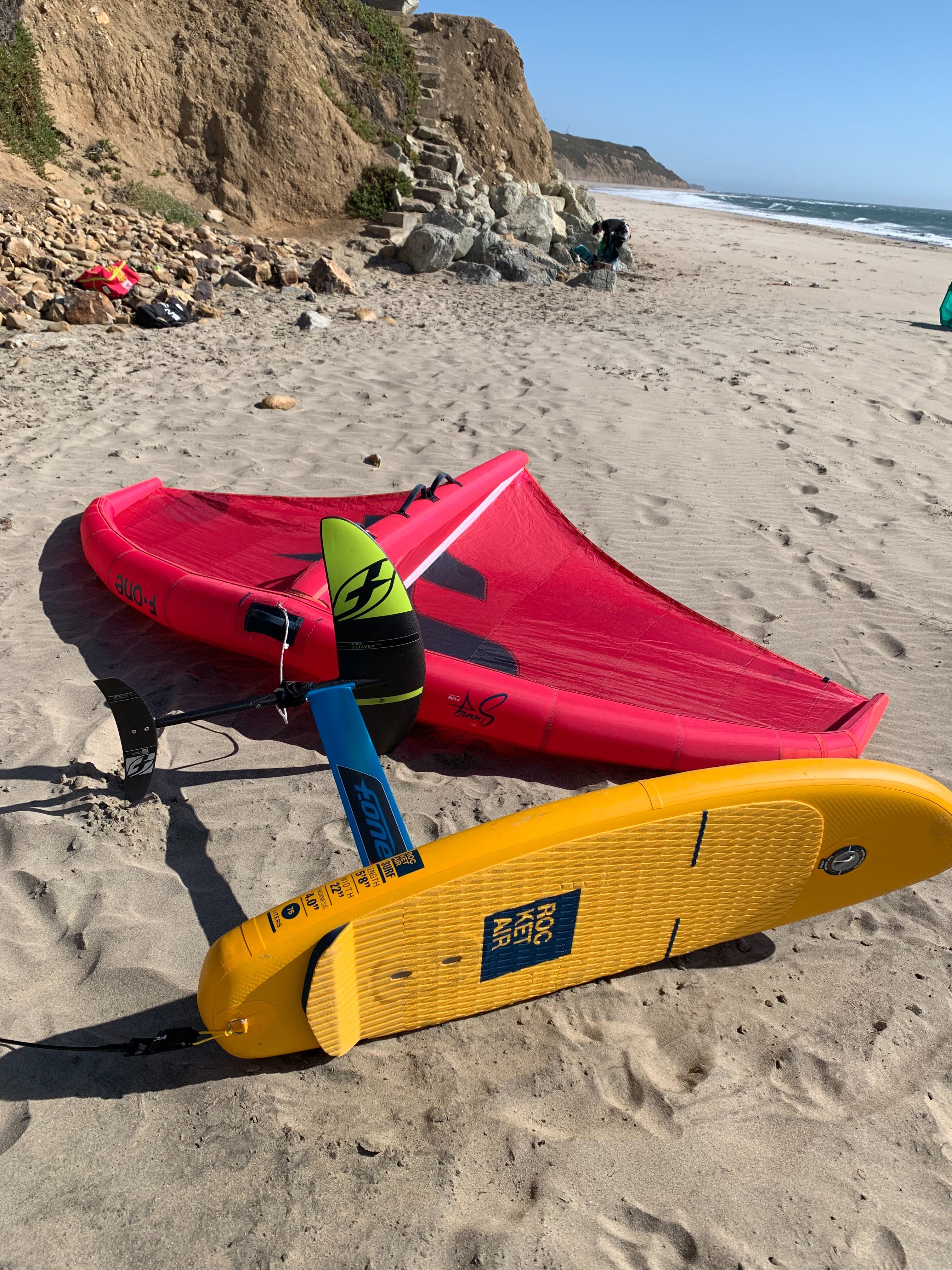
First go with the rocket air surf at Wadell
The inflatable has host of benefits like the soft surface and no more bruises. Extra volume in a smaller outline makes it more maneuverable. Portability is great and when deflated the board rolls into a pack similar to a small kite. This allows you to take it anywhere, it travels easy with no baggage fees. The weight is a key benefit as lugging any board attached to a foil out of your car, up the beach, into a head wind, through the surf, wherever is a pain. This board weighs nothing so you’re really only carrying the foil wing weight for the most part. Floatation is fantastic so you can paddle it to get off the beach or when the wind dies and you’re a half mile offshore on a downwinder. The Price! It’s nearly ½ the cost of most hard boards out there. And the Rocket Air Surf is super versatile. It makes for a great board for kids and others to get on the water or is great behind a boat or jet ski for new riders who want to learn the foil aspect of wingsurfing.
Some other tips I’ve learned along the way, take to a flat water location with lots of downwind room initially. Fighting larger swell, kelp and surf upon entry/exit only adds to the challenges of getting going. You may not have a flat water spot around but if you do it should be your first choice until you get more proficient. Managing the wing(s) and board is all new and there’s a lot going on at this stage of learning. Make sure you have all your gear. Can’t tell you how many times I was missing a certain screw, grabbed the wrong foil, forgot the pump adapter, whatever.
Again, new sport, new equipment. Make sure you have everything. Wear the appropriate gear and hydrate. If you’re in cold water make sure you have a thick wetsuit. You’ll be in the water a lot more than usual when your kiting or doing whatever water sport you usually do. If you’re in warmer water you may want to shed a layer or use a thinner suit. The amount of energy output when your learning is significant. It’s easy to tire out quickly during this phase of the learning process. The sooner you can get up on the board and actually foil the longer your sessions will become. By the way, warmer water is always preferred! And don’t forget to hydrate. It’s a bit of a calorie burner in the beginning and your biceps will feel and show it.
If you’re new to wingsurfing with no background in foiling it may be easier to take each part separately. In other words, go get a foil board (Rocket Airs a great start) and a friend with a boat or ski and learn getting up on the foil in that controlled environment. It’s a fun day on the water with friends and everyone can give it a go. Then separately spend some time with the Swing or whatever brand wing you have. Learn to handle it on the beach competently making hand changes with minimal effort. Simulate what you would be doing in the water when you need to tack. As mentioned, there’s a lot going on the first couple times in the water so the more you’re comfortable with things on land the quicker you’ll be at progressing.
A foot note on equipment, F-One is coming out with the new Rocket Wing series of boards which are a hard board with more volume intended specifically for wingsurfing. I’m looking forward to giving one of these a go soon but still believe the Rocket Air Inflatable is a great option for learning with.
This new sport is changing quickly and part of that is sharing experiences. Hopefully this will help others expedite through some of the pain I experienced working towards the right setup early on and find a niche board offering that may be right for you. Stay Salty!
The Kiteboarder Magizine Interview….
DEVELOPMENT PROGRAM START, WHO WAS THE LEAD INSTIGATOR IN YOUR BRAND AND DESCRIBE YOUR EARLY EXPERIENCES WITH WINGSURFING DEVELOPMENT?
It all started back in November 2018 when company founder, Raphael Salles, decided to try this new sport. He called our designer Robert and asked him what he could design, then designed and ordered our first Swing prototype. As Raphael and equipment tester Micka were very busy developing the new Bandit, this prototype had traveled to Cabo Verde and Cape Town without being tested. On their last trip to Cabo Verde in February 2019, Raph finally put the Bandit testing on hold for a day in order to test the wing prototype. After that first session, interest in the wing escalated quickly and an intense testing process started. Raph and Robert built prototype after prototype, experimenting and testing many features before finding the excellently balanced wing that is the Swing. The team completely fell in love with the sport and immediately saw all the opportunities that it would offer. Testing it in many conditions, from gusty 45 knots in the south of France to 8 knots in a Mauritian lagoon, The Swing offers a whole new world full of riding possibilities.
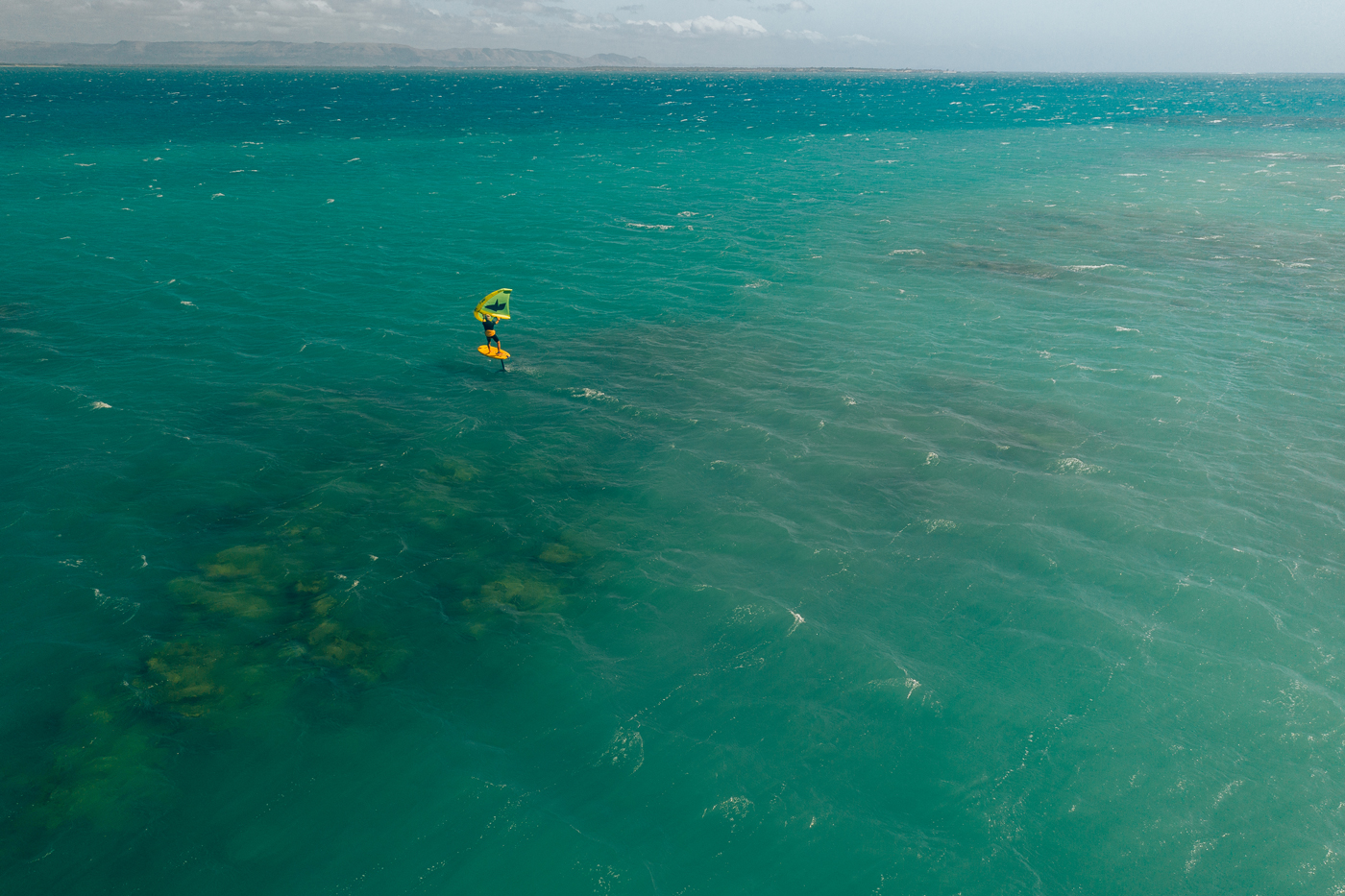
Photo: Ydwer van der Heide
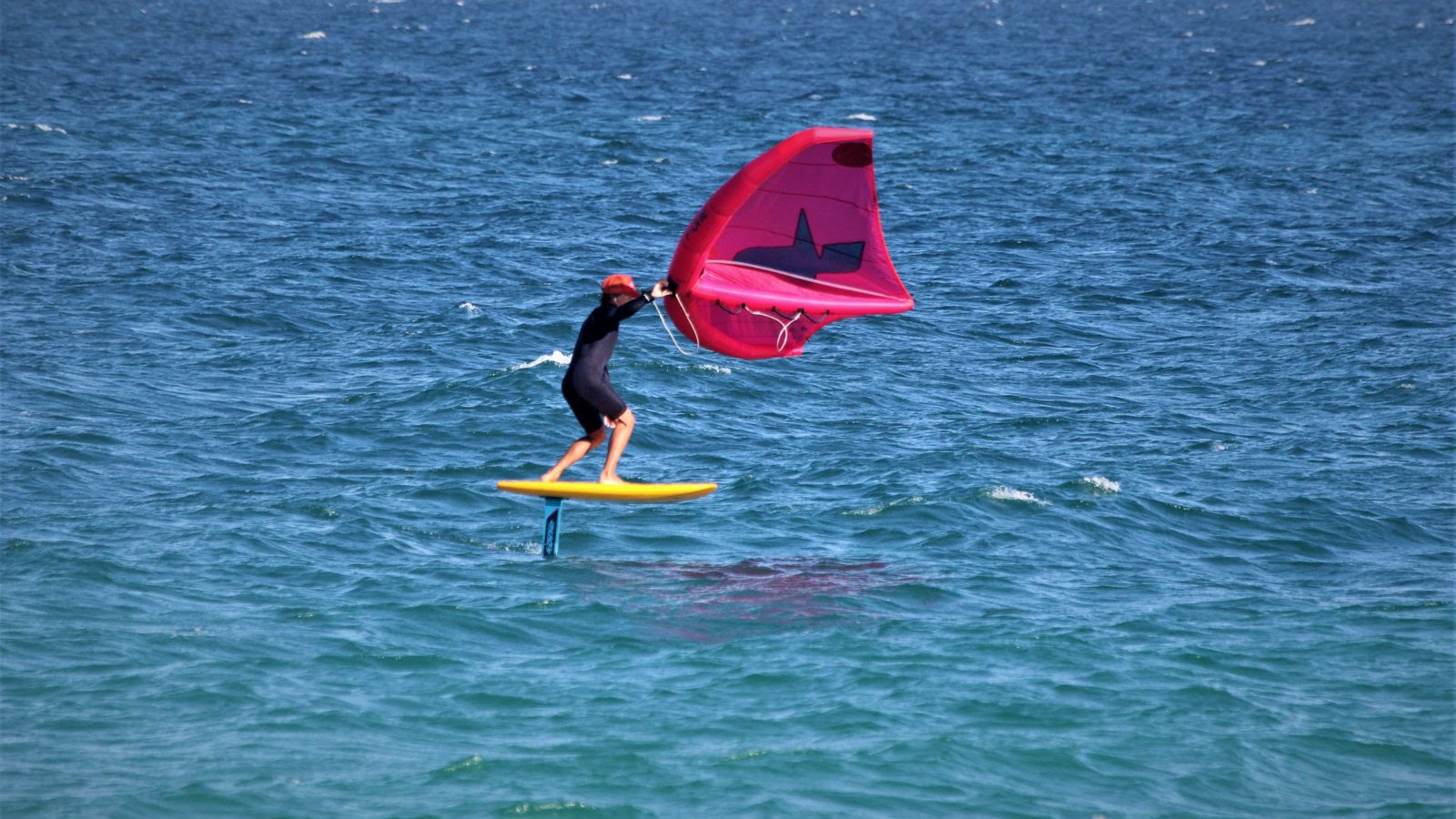
This is part two in a three-part series on the experiences of a wingsurfers guide through progression. We had a bit of a break in the wind here in La Ventana allowing for some rest and reflection. As mentioned in part one , I started this winging journey recently and wanted to pass along some of the experiences as new people learn about this exciting sport. Now, with roughly a month of solid riding behind me there has been a lot that has been learned and still more to know. I’m spending this season in La Ventana, a well-known kiting destination that I’ve visited many times over the past 14 years. It’s the perfect learning grounds for wing surfing. Coming from a strong kite surf background and focused purely on wave riding, I’m excited how winging has transformed my perception of a place like La Ventana that has “no waves”. This is true, there is very little in the way of “surf” here but there’s a good amount of deep water swell. Swell that can be easily ridden with a foil and wing which has made La Ventana, do I dare say it, a “surf destination” when viewed through the lens of riding swell with a wing and foil. A quick recap of my progression which started with the 7’6” Rocket Sup by F-one, a 1800cm Gravity foil and 4.2M Swing kite. After a few sessions and frustration with the longer SUP I went towards the other end of the board size spectrum to a custom 41L board that I’d prone foiled. Then to a 35L F-One Rocket Surf model which was fun but very challenging to water start unless there was a lot of wind. Next the smaller 5’8” Rocket Air inflatable was used which was a great transitional board and now in the past week I’ve managed to get my hands on the new Rocket Wing board by F-One that’s just coming out. The Rocket Wing range have four models from a 5’0”x 22” at 60L up to a 5’10 x 25” at 90L. These boards are specifically targeted towards the need for a board that will float enough to get you up on a foil with your wing easily yet maintain good performance. The exact model I have is a Rocket Wing 5’4” x 22” at 60L and I weigh about 160lbs. For the level that I’m at right now, the Rocket Wing board has allowed me more time up on the foil and provided the necessary stability to continue improving my skills. It’s much easier to get up on than the 35L/40L boards I was riding and creates a more direct and aggressive feel with the foil than the Rocket Air SUP inflatable which was a great tool in my progression. Much more compact than the 7’6” SUP I started on, the Rocket Wing has way less swing weight and overall felt really controllable. Here’s some more detail on positive aspects of the Rocket Wing based on my experience with the board. The ease of use and overall general stability on a number of levels. First, just floating on the board seems easier with a slower rocking motion thanks to the width, thickness, volume and bottom shape of the board. It’s stable while sitting in the swell, preparing to get up. It’s stable with a knee start keeping both knees parallel and pointed towards the nose when getting to your feet. It’s stable with a front foot up while still on a back knee during the transition to your feet and then when bringing the board up onto foil is also more solid. Another positive attribute is the volume and proportional outline of the board. It maintains stability during touchdowns onto the surface of the water when the wind would lull and I was able to remain standing and could get going again on a foil during these lulls much more frequently. On previous boards, even the SUP I’d often fall off as there was either too much side to side resistance or not enough on a smaller sized board. Tacking and jibing were also easier on this board. To date I’d spent most my time riding strapless toe side one way and heel side the other, never switching my feet. The Rocket Wing’s wider outline helped to compensate for poor foot placement. After only a few attempts I was able to switch stance much more confidently and maintain a better (heel side) tack allowing me to point higher upwind. Switching stance back to toe side and downwind jibes were easier as well. Portability, the new handle is genius making it much easier to manage the board in and out of the water. Unloading the board from your vehicle is simplified with the designated handle to carry the board from. This is the normal way to carry the board now regardless if I have a foil mounted or not. It just works really well and is positioned perfectly to offset the weight of an attached foil but also feels great when carrying with no foil attached. Getting over whitewater is easier by turning the board upside down, paddling the board with foil in front of you and placing one hand in the handle (it’s on the bottom of the board) to guide the board. This works really well and you can literally steer the board with the handle as you paddle out. Even with a harness on with the spreader bar hook I found that positioning myself further back with the harness off the back (nose) of the board made getting out a snap and no more swinging foil of death in the air in front of you every time you hit a whitewater or go over a wave. Standard features on the entire Rocket Wing line are well thought out. The pads are super comfortable even after hours of riding. The twin track (4 bolt plate) system works effortlessly and accepts most foils. While being relatively thick to create volume, the board feels good under your arm and is really light for its size. It’s much easier to carry into the wind when on the beach or loading on a car than larger boards. I’m spending a ton more time up on the foil and getting up much easier as a result of the Rocket Wing design. My progress has come a long well over these few weeks and the Rocket Wing made much of it possible. I love to tinker with different size boards, foils and wings and in the last few sessions I opted to go back down to the 5’0” 35L Rocket Surf and found that I can now get up on it much quicker compared to my earlier struggles. As with many sports the more time, the more progression the more you can finesse things as you get better and that seems to be exactly the case when I tried the smaller boards once again. A few things I’ve learned along the way. Make your life easy with this new sport. There’s equipment out there that’s really well designed for winging. The sport in general is relatively new and personally I have tried dozens of combinations of boards, foils and wing sizes. Fortunately, I have access to a lot of equipment that most people don’t but even after all the trials and tribulations, it would have been easier to wait until gear like the Rocket Wing board was available. It’s suited exceptionally well for the average wing surfer. Whatever equipment you end up on, play with the settings and adjustments. Even very small adjustments like moving your foil forward or back a 1/16th of an inch can make a huge change. Once you find that optimal foil setting, mark it with a
| size | 4'8", 5'0", 5'0" w/ Inserts, 5'4", 5'4" w/ Inserts, 5'5", 5'10", 6'0", 6'6" |
|---|
Be the first to review “F-One Rocket Wing Wide V2 Board”
Related products


Wing

Reviews
There are no reviews yet.